
Blog

If you’ve been searching how to render tallow after seeing it all over TikTok and Google’s food trend lists this year, you’re not alone. It’s one of the fastest-growing “make it yourself” topics in ancestral cooking and skincare right now.
Here’s exactly how it’s done, and why we still do ours the slow way. Watch the full process in our video below 👇
What Is Tallow, and Where Does It Come From?

Tallow is rendered beef fat. Traditionally it comes from suet, the firm fat around the kidneys, which renders the cleanest and mildest. Once rendered, tallow becomes a shelf-stable, versatile fat. People have used it for high-heat cooking and skincare for generations, long before seed oils and synthetic moisturisers existed.
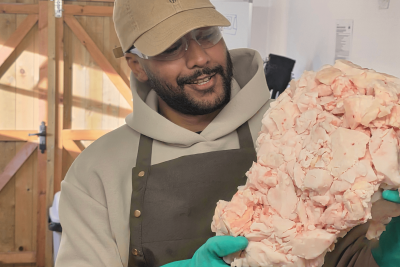

How to Render Tallow at Home (Dry Rendering)
This is the method you’ll see in our video — the traditional way, with no added water:
- Start with good suet. Ask a butcher for beef suet if you can — it renders cleaner than other cuts.
- Cut or grind it into small pieces. Smaller pieces render faster and more evenly.
- Melt it low and slow, dry. Use a heavy pot or slow cooker. Low heat over several hours gently melts the fat away from any connective tissue. We add no water — that’s what makes this “dry” rendering.
- Strain it. Pour the melted fat through a fine strainer or cheesecloth to remove any solids.
- Pour and cool. While it’s still liquid, pour it into clean jars. Leave a little headspace, then let it cool at room temperature before you seal it.
This is the process we use for our cooking tallow. It’s simple, traditional, and exactly what you want for a fat that’s going in a frying pan.


We could render in bulk or cut a few corners, but we don’t. Doing it by hand, in small batches, lets us watch and control the process closely. Rushing it shows in the final jar — taking our time doesn’t.
Why Our Skincare Tallow Is Made Differently
Cooking fat and skincare need different things from the same starting ingredient. So we don’t stop at dry rendering for our skin cream. For skincare, we wet render and further purify the tallow. This slower, more involved process removes more impurities and any lingering scent. The result is a milder, cleaner fat that’s gentler for direct use on skin.
It takes more effort, but there’s a real difference between a fat that’s great in a hot pan and one that feels genuinely nice on your face.
Watch our process here.
Two Processes, Two Purposes
- We dry render our Grass-Fed Beef Tallow cooking fat — the process shown in our video.
- Our Whipped Tallow Skin Cream starts from the same quality tallow. Then it goes through wet rendering and purification before we whip it.
